Introduction
In today’s interconnected world, businesses are no longer limited by geography. Companies are expanding across countries, serving diverse audiences, and operating in multilingual environments. However, one of the biggest challenges in global expansion remains communication.
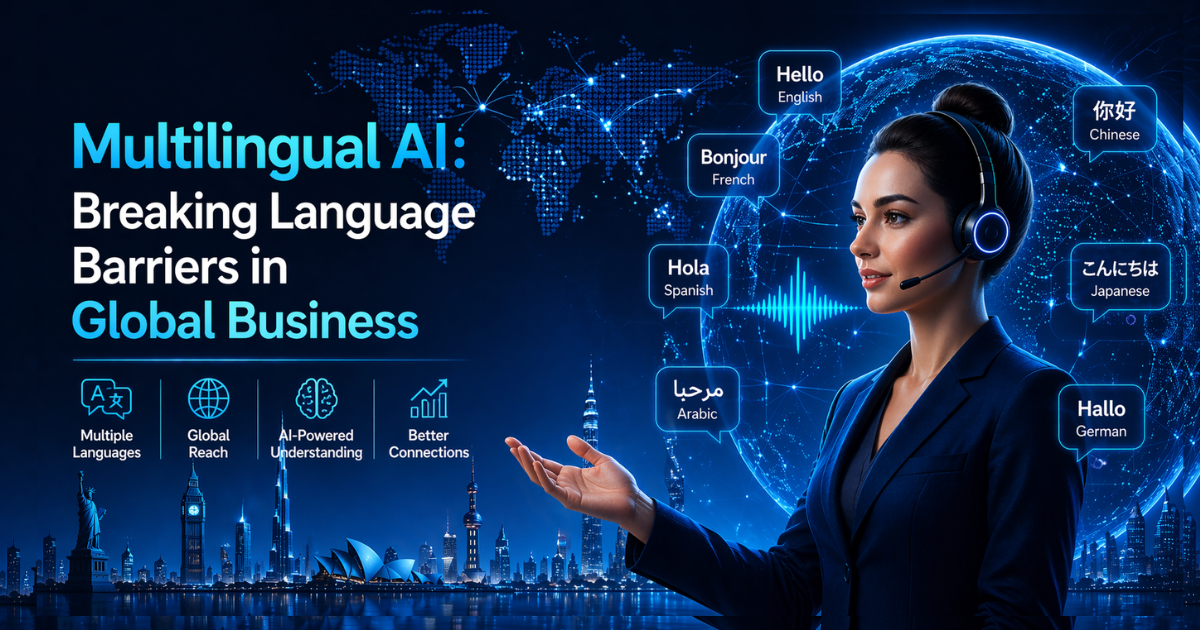
This is where multilingual AI is transforming how businesses interact with customers. By enabling real-time communication across multiple languages, multilingual AI is helping organizations break barriers, improve customer experience, and scale globally.
From retail stores and airports to corporate offices and healthcare facilities, language AI technology is becoming a critical tool for delivering seamless and inclusive customer interactions.
The Growing Need for Multilingual Communication
Globalization has created a diverse customer base where people speak different languages, follow different cultures, and have unique expectations.
Businesses today face challenges such as:
- Language barriers in customer interaction
- Difficulty in providing consistent support
- Limited multilingual staff availability
- Miscommunication leading to poor customer experience
To overcome these challenges, companies are turning to multi-language AI assistants that can communicate effectively with customers in their preferred language.
What is Multilingual AI?
Multilingual AI refers to artificial intelligence systems capable of understanding, processing, and responding in multiple languages.
Unlike traditional translation tools, multilingual AI goes beyond simple word-to-word translation. It understands:
- Context
- Intent
- Tone
- Cultural nuances
This makes it a powerful AI translation solution that delivers more accurate and natural communication.
How Multilingual AI Works
Modern language AI technology combines multiple AI components:
Speech Recognition (ASR)
Converts spoken language into text
Natural Language Processing (NLP)
Understands the meaning and intent of the message
AI Translation Engine
Translates content accurately across languages
Text-to-Speech (TTS)
Delivers responses in natural voice
Together, these components create a seamless multi-language AI assistant capable of real-time communication.
Multilingual AI vs Traditional Translation Tools
| Feature | Traditional Translation | Multilingual AI |
| Accuracy | Basic | High |
| Context Understanding | Limited | Advanced |
| Real-Time Interaction | No | Yes |
| Voice Interaction | No | Yes |
| Customer Engagement | Low | High |
This clearly shows why multilingual AI is the future of communication.
Role of Multilingual AI in Global Customer Support
Providing effective global customer support AI is one of the biggest advantages of multilingual AI.
Businesses can:
- Offer 24/7 support in multiple languages
- Reduce dependency on multilingual staff
- Provide consistent and accurate responses
- Improve customer satisfaction
A multi-language AI assistant ensures that every customer feels understood, regardless of their language.
Key Business Benefits of Multilingual AI
Expanded Global Reach
Businesses can serve customers across different countries without language limitations.
Improved Customer Experience
Customers feel more comfortable communicating in their native language.
Cost Efficiency
Reduces the need for hiring and training multilingual staff.
Faster Response Times
Instant communication without delays.
Consistency in Communication
Ensures uniform messaging across all languages.
Real-World Use Cases
Retail & Shopping Malls
Assist customers in different languages and improve sales experience
Airports & Tourism
Provide guidance and information to international travelers
Healthcare
Enable communication between patients and medical staff
Corporate Offices
Support global employees and visitors
Events & Exhibitions
Engage diverse audiences effectively
Multilingual AI in Retail and Customer Experience
Retail businesses are among the biggest beneficiaries of multilingual AI.
With AI-powered assistants, retailers can:
- Recommend products in multiple languages
- Assist international customers
- Improve engagement and conversions
- Deliver personalized experiences
This makes multilingual AI a key driver of modern global customer support AI.
Multilingual AI and Data Privacy
One major concern with AI systems is data privacy—especially when dealing with multiple regions and regulations.
Advanced platforms use on-device AI or secure cloud systems to ensure:
- Data protection
- Compliance with global regulations
- Secure communication
This is particularly important for industries like healthcare and banking.
Multilingual AI in Digital Human Avatars
Digital human avatars powered by multilingual AI take customer interaction to the next level.
These avatars can:
- Speak multiple languages naturally
- Switch languages in real time
- Provide human-like interaction
- Deliver consistent and accurate responses
This creates an immersive experience that goes beyond traditional interfaces.
Challenges in Implementing Multilingual AI
While the benefits are significant, businesses may face challenges such as:
- Initial setup complexity
- Integration with existing systems
- Handling regional dialects
- Maintaining translation accuracy
However, modern AI platforms are addressing these challenges with advanced models and adaptive learning.
The Future of Multilingual AI
The future of language AI technology is incredibly promising. We can expect:
- More accurate real-time translation
- Better understanding of cultural context
- Voice-first AI interactions
- Wider adoption across industries
Multilingual AI will become a standard feature in all customer-facing technologies.
Conclusion
Multilingual AI is no longer just an optional feature—it is a necessity for businesses aiming to succeed in a global market.
By enabling seamless communication, improving customer experience, and reducing operational costs, multilingual AI is transforming how organizations interact with their audiences.
Businesses that adopt this technology early will gain a significant competitive advantage in global markets.
